No products in the cart.
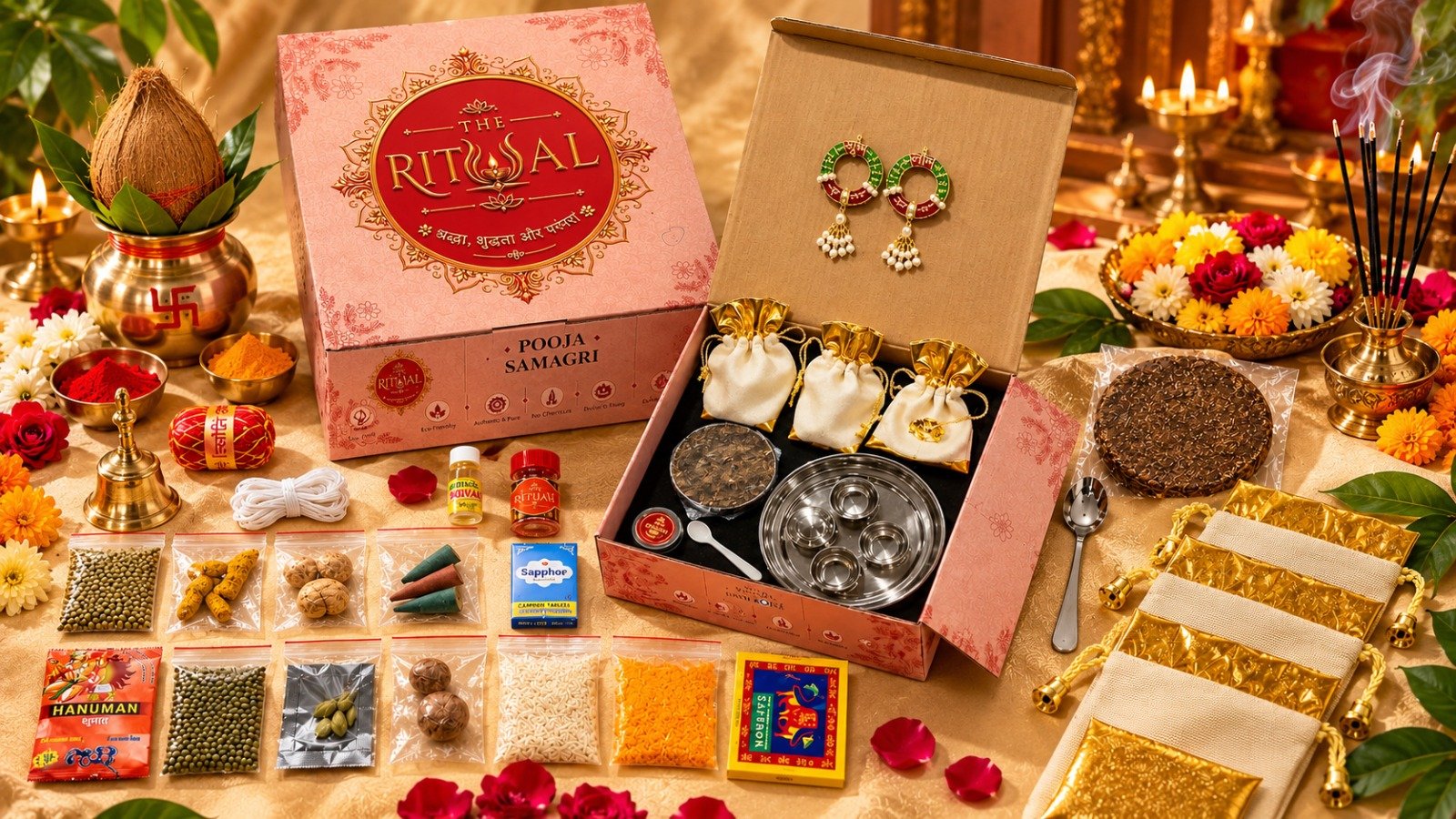
Navratri Pooja Samagri
THE RITUUAL | FESTIVE HOME GUIDE
Navratri
Pooja Samagri
ESSENTIAL ITEMS FOR
NAVRATRI POOJA AT HOME
NAVRATRI POOJA AT HOME
Navratri
Devotion, prayer and tradition
Navratri is celebrated with devotion across India, with families following different customs and regional traditions.
If you are planning to perform pooja at home, arranging the essential samagri in advance can make preparation easier and more organised.
Quick Navratri Pooja Samagri Checklist
| Category | Commonly Used Items |
|---|---|
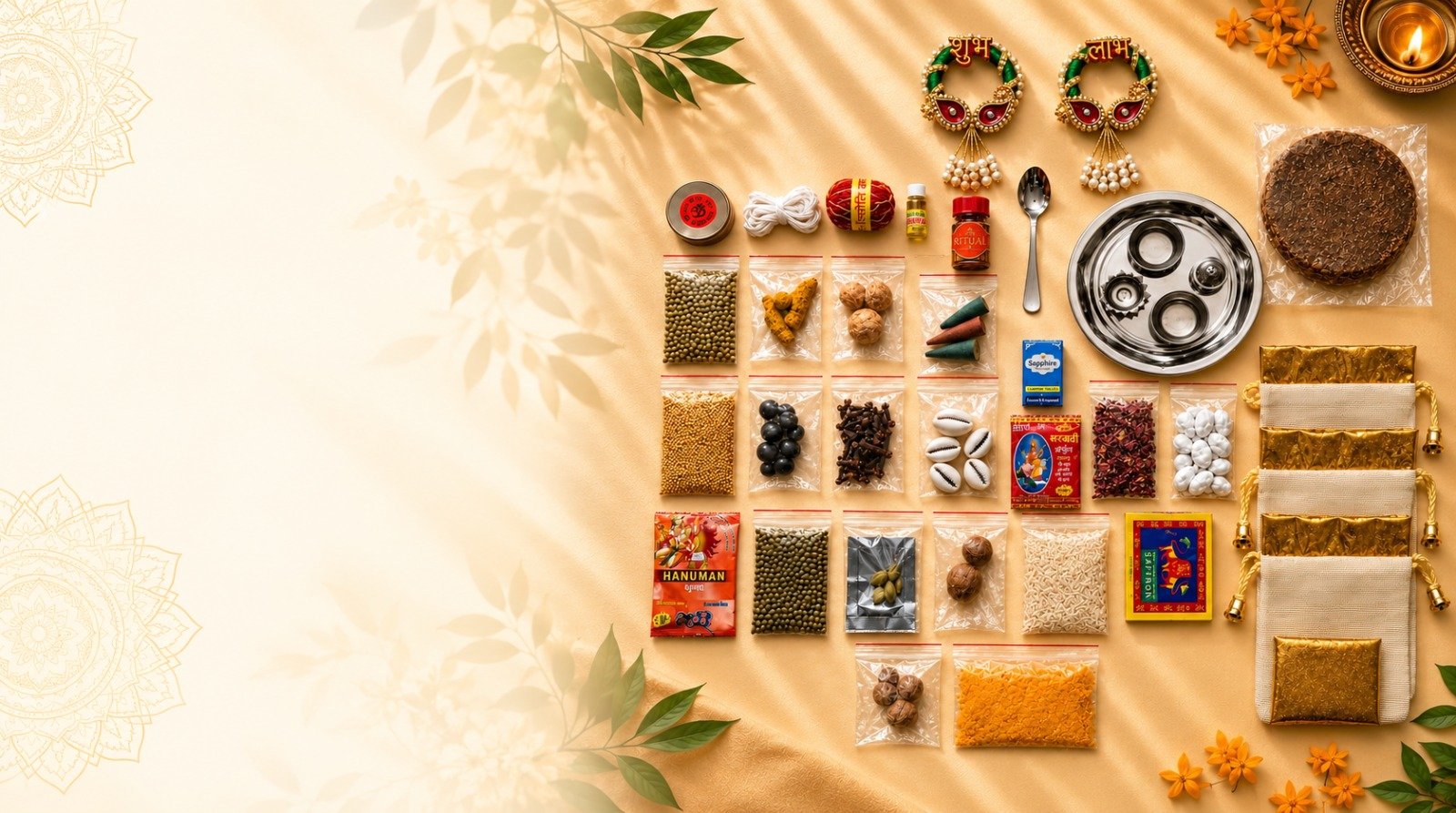
| Puja essentials | Kalash, clean water, roli or kumkum, rice (akshat), flowers, diya and incense. |
| Kalash Sthapana | Kalash, coconut, mango leaves where customary, red cloth, sacred thread and soil with barley seeds if sowing Jaware. |
| Offerings | Fruits, sweets, water, betel leaves and nuts as per family custom. |
| Panchamrit | Milk, curd, ghee, honey and sugar, if used in your puja. |
| Aarti | Diya, camphor, bell and aarti plate. |
Essential Navratri Pooja Samagri at a Glance
Tip:
Keep daily-use items together in a tray.
Check your family's puja vidhi before buying
materials needed only for a specific ritual.
Complete Navratri Pooja Samagri List
Use this detailed list as a preparation guide. Choose the items according to the rituals you plan to perform and your family tradition.
| For the puja altar | A clean chowki or platform, red or yellow cloth, clean water, container, sacred thread, incense, image or idol of the Goddess. |
| For Kalash Sthapana | Kalash, coconut, mango leaves where customary, sacred thread and rice. Some traditions also use soil and barley seeds for Jaware. |
| For daily worship | Roli or kumkum, haldi, akshat, flowers, garland, sandalwood paste, incense sticks, wicks and ghee or oil. |
| For bhog and prasad | Seasonal fruits, sweets or homemade prasad, dry fruits and drinking water. |
| For Panchamrit | Milk, curd, ghee, honey and sugar. |
| For aarti | Aarti thali, diya, camphor, bell and other traditional aarti items. |
| Optional ritual items | Betel leaves, betel nut, cloves, cardamom, coconut, red flowers and other items specified by your family's puja vidhi. |
Items for Ghatasthapana and Jaware
If you perform Ghatasthapana, arrange the kalash and materials prescribed by your tradition. Some households sow barley seeds in clean soil during Navratri.
How to Arrange the Pooja Samagri at Home
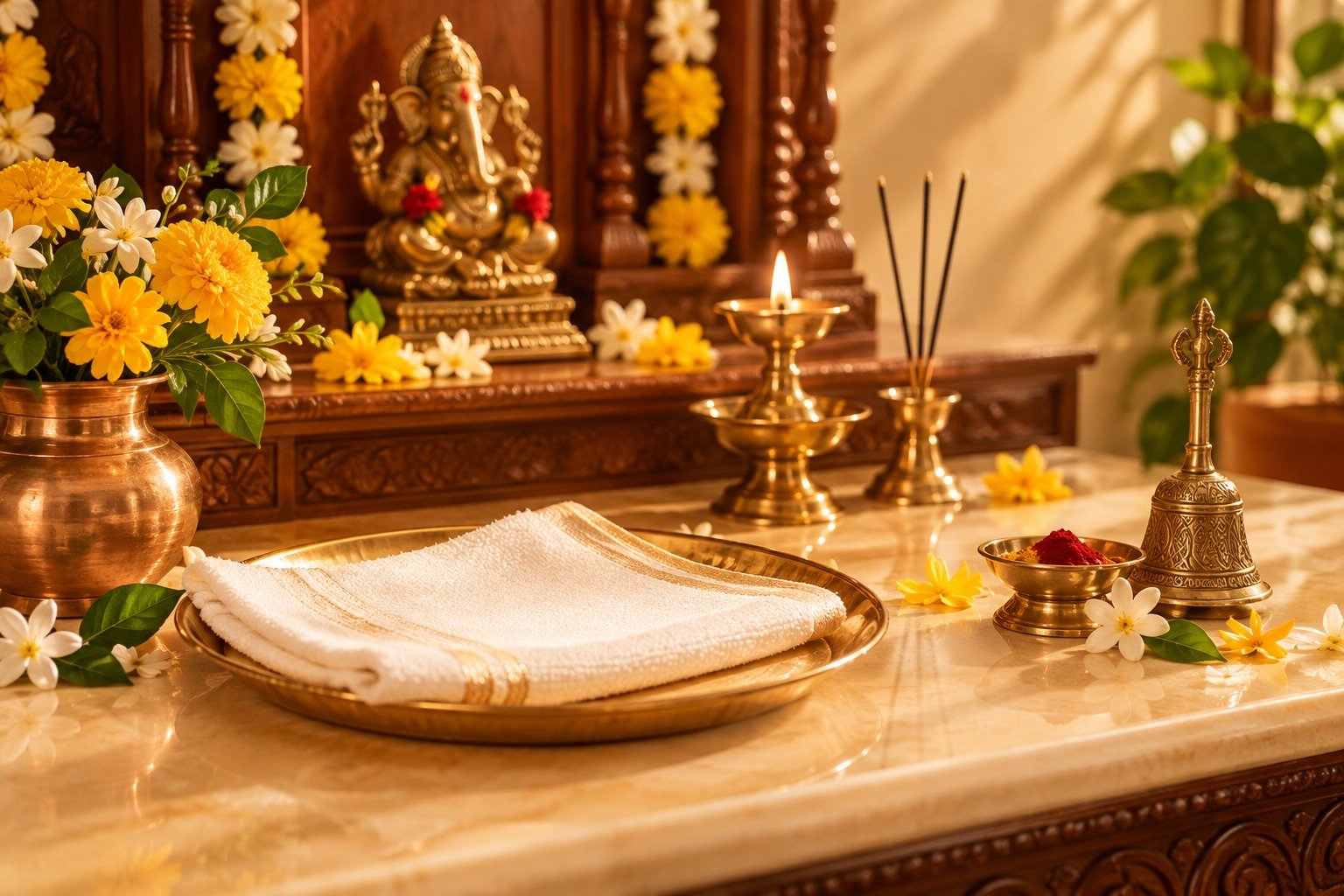
A little organisation can make the puja routine smoother. Clean the area first, then arrange the items so that offerings and aarti materials are easy to reach.
01
Clean the pooja space
Wipe the chowki or altar and place a fresh cloth over it.
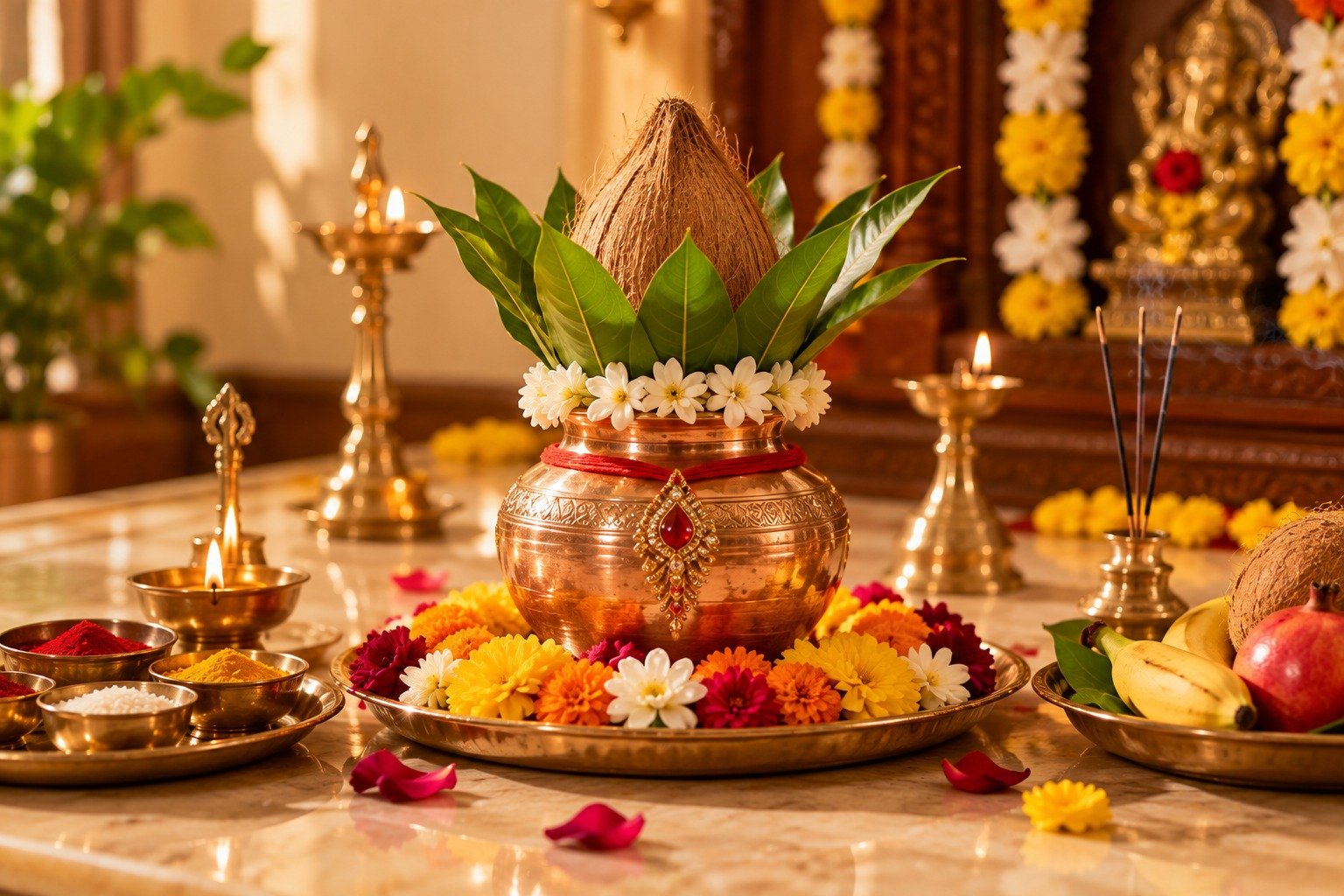
02
Arrange the Kalash
Set up the kalash according to your family's Ghatasthapana tradition.
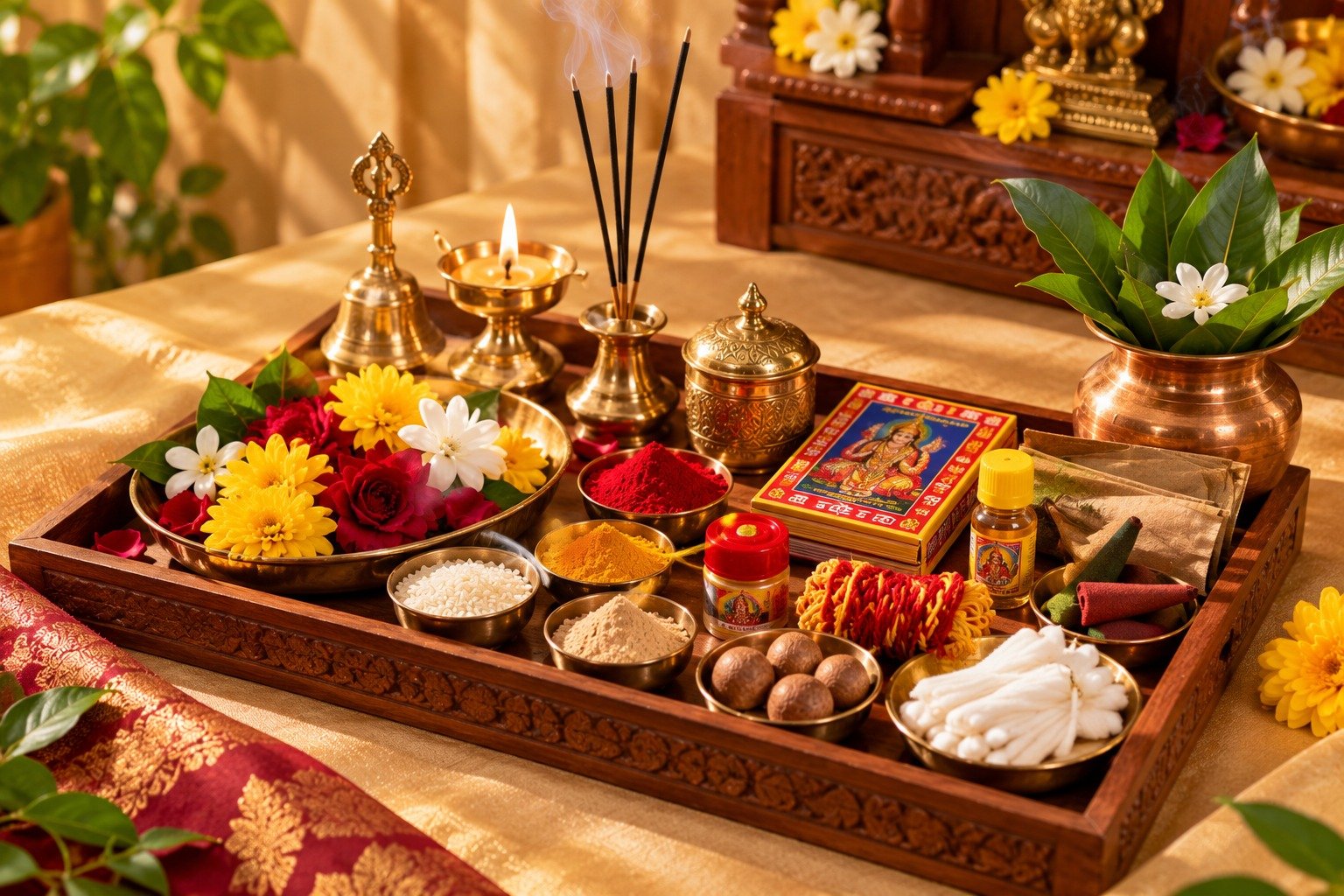
03
Keep daily puja items together
Arrange kumkum, haldi, akshat, flowers, chandan and incense together.
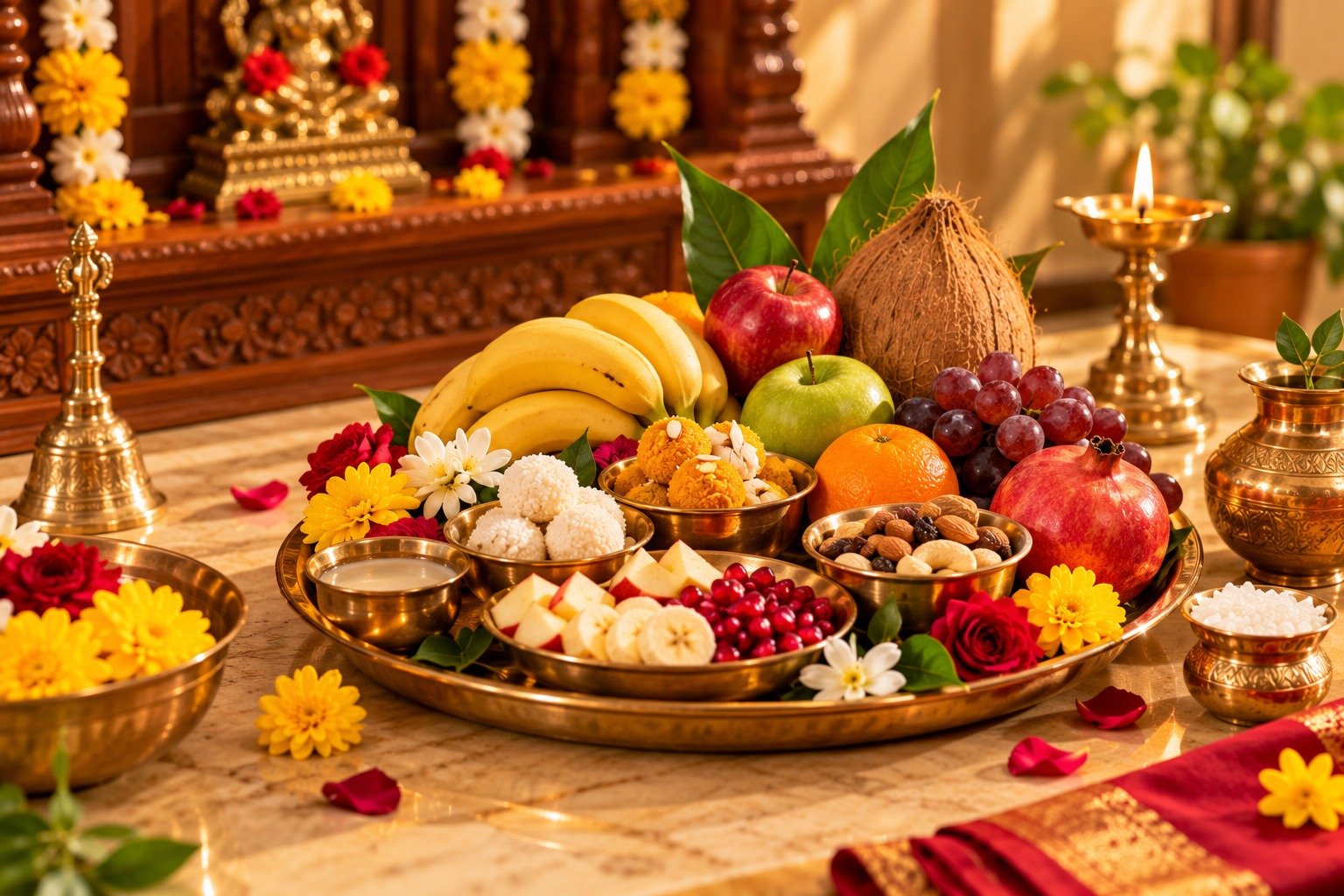
04
Prepare offerings
Wash fruits and prepare bhog or prasad according to your household practice.
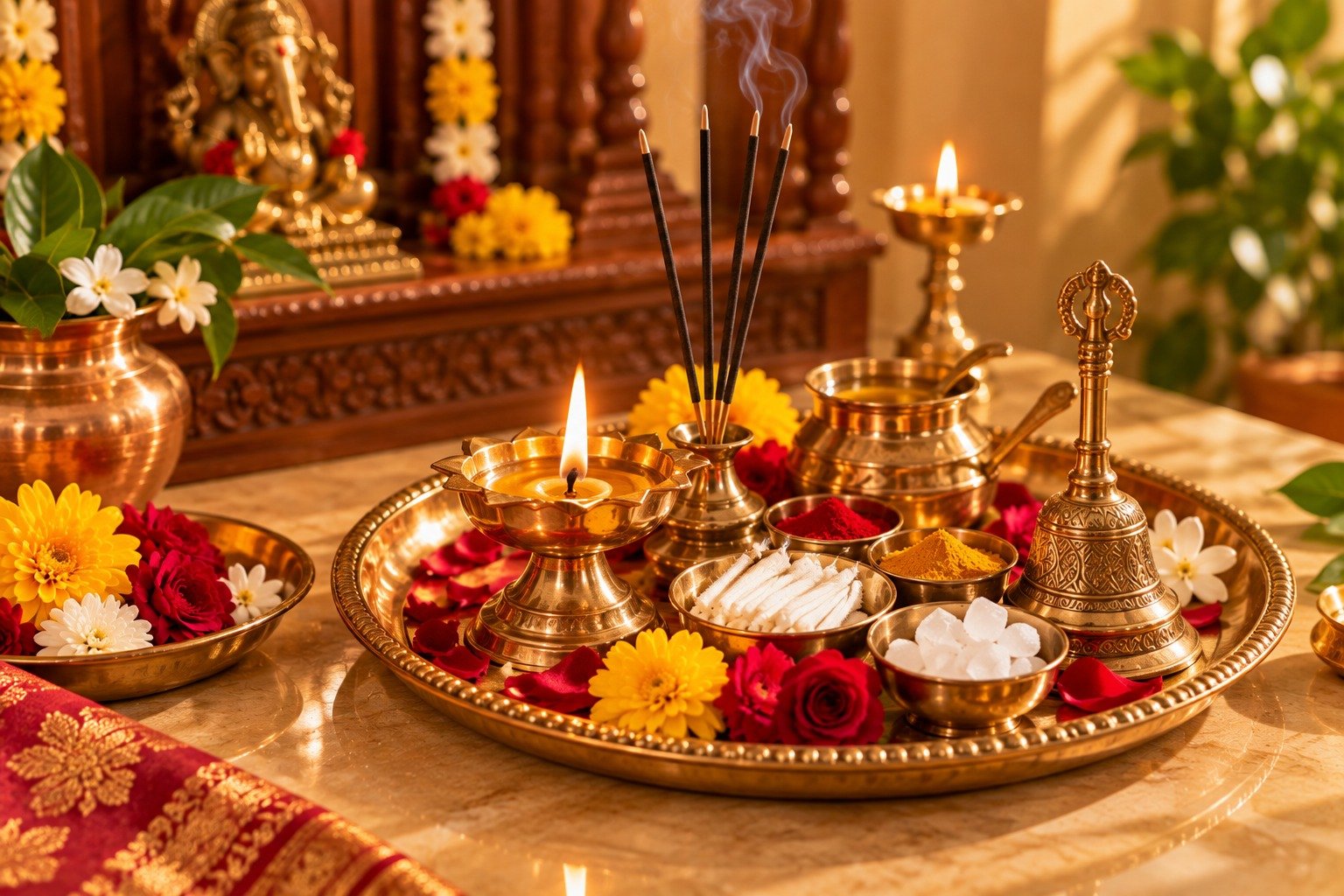
05
Keep aarti items safely
Keep diya, cotton wicks, ghee or oil, bell and camphor together.
Additional Samagri for Ashtami or Navami
Some families perform Kanya Pujan on Ashtami or Navami. Common preparations may include:
| Purpose | Items to Consider |
|---|---|
| Welcome and puja | A clean seat or asana, flowers, kumkum and akshat. |
| Prasad or meal | Prepared food such as halwa, puri and kala chana. |
| Gifts (optional) | Small gifts, fruits, stationery or other tokens. |
Keep in mind:
Kanya Pujan customs, food offerings and the number
of participants can differ among families and regions.
Bring Home the Essentials for Navratri
Find thoughtfully curated pooja samagri and festive essentials at The Rituual.
Explore Pooja Samagri →Frequently Asked Questions
Navratri Pooja Samagri refers to the commonly used items prepared for Navratri worship.
No. The required items can vary according to your family tradition and the type of puja.
Kalash Sthapana is an important practice followed by many families during Navratri.
Yes. Navratri rituals vary by household and tradition.
Offerings can include fruits, sweets and traditional homemade prasad according to family customs.
Preparations may include clean seating, flowers, kumkum, akshat, prasad and optional gifts.